The Milk Procurement System stands as the foundation of Sursagar Dairy’s success as a farmer-owned cooperative. Built on the Seven Principles of Cooperation—voluntary membership, democratic control, economic participation, autonomy, education, cooperation among cooperatives, and concern for community—the dairy operates with a strong commitment to inclusiveness, transparency, and shared prosperity.
Sursagar Dairy is owned and governed by its member farmers, ensuring that every decision reflects the collective interest of the rural community. To eliminate intermediaries and ensure fair value to producers, the dairy has developed a robust network of over 96,222 milk producer members, supported by 646 Village Level Cooperative Societies (VLCSs). Through this extensive grassroots system, the dairy procures approximately 4.70 lakh liters of milk per day, facilitated by 204 Bulk Milk Cooling Units (BMCUs) across the district.
Milk procurement is carried out twice daily—during morning and evening sessions—ensuring convenience and efficiency for farmers. The collected milk is promptly transported to the nearest BMCU, where it is rapidly chilled and stored at temperatures below 4°C, preserving its natural freshness and quality. The milk is then transferred to the processing plant for further scientific processing under stringent quality standards.
The dairy has established a fully integrated cold chain system, ensuring that milk maintains its purity, freshness, and nutritional value from producer to consumer. This reflects the cooperative’s commitment to quality as well as to consumer trust.
Sursagar Dairy actively supports its members through a dedicated team of veterinary experts and extension staff, who provide continuous guidance on animal health care, clean milk production, and sustainable dairy practices. These initiatives empower farmers, improve productivity, and enhance the overall quality of milk.
Guided by cooperative values, the dairy is widely respected for its democratic governance, fair and transparent pricing policy, and prompt payment system, ensuring financial security and trust among its members. The trained field staff, working closely with village communities, remain the backbone of this cooperative structure and play a vital role in strengthening farmer relationships and operational excellence.
To enable milk procurement directly from the farmers, we select our DCS secretory after the recommendation of group of farmers of respected villages. After giving proper training to secretory, we install automatic milk collection unit (AMCU).
At VLCC every farmer’s milk is tested for its quality Fat/Snf. The milk rate per litre is calculated on the basis of quantity, Fat and Snf. Each farmer is allocated a unique code number. When milk purchase transaction is done, printed slip to the each farmer mentioning all the detail of said transaction with amount of milk poured is given.
The organization operates more than 85 milk procurement routes using dedicated compartment tankers. Each route follows a fixed schedule and a predefined route plan, covering multiple villages during both morning and evening shifts.
Stringent Quality Checks:
The dairy has established stringent quality control measures right from the milk collection level at village to the consumers at urban level.
The dairy has established stringent quality control measures right from the milk collection level at village to the consumers at urban level.
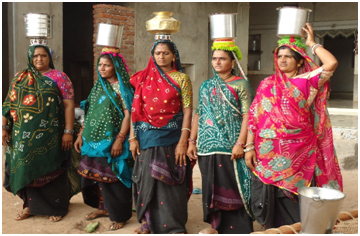
Women farmers bringing milk to the Village Level Collection Centre (VLCC)
To maintain consistent production standards and ensure high milk quality during procurement and processing, it is essential to preserve milk quality right from the village level. With this objective, the Union has installed Bulk Milk Coolers (BMCs) of various capacities at village cooperative societies.
These BMCs enable immediate chilling of milk at the point of collection, which significantly improves milk quality. Rapid cooling helps prevent the growth of microorganisms, thereby preserving freshness and extending shelf life.
The installation of BMCs also provides operational flexibility:
As a result of immediate cooling, around 70% of the milk procured achieves an MBRT (Methylene Blue Reduction Time) of 2 to 3 hours, indicating good microbiological quality. This enables the dairy to supply high-quality milk that meets market and international standards.
The Automatic Milk Collection Unit (AMCU) plays a vital role in ensuring transparent, efficient, and high-quality milk procurement at the village level. It enables quick testing of milk quality parameters such as fat and SNF (Solids-Not-Fat), while also generating a computerized transaction slip for farmers with complete details of the milk supplied.
An AMCU system consists of the following components:
The Milk Analyzer measures the fat and SNF content of the milk within approximately 30 seconds. The electronic weighing scale records the quantity of milk supplied by the farmer.
The Data Processing Unit integrates data from both the Milk Analyzer and the weighing scale. It calculates the total value of the milk based on quantity and quality parameters, and then sends instructions to the printer to generate a detailed transaction slip for the farmer.
The implementation of AMCU systems has significantly improved the milk collection process by:
Overall, AMCU provides a simple, fast, and reliable solution for record-keeping, billing, and reporting at the primary milk collection level, making effective use of information technology.
Milk is a primary raw material used to manufacture a wide range of products such as ghee, milk powder, butter, paneer, curd, buttermilk, and sweets. The quality of all these products depends on both the processing methods and the quality of the raw milk. If the raw milk is of high quality, the final products will also meet superior quality standards.
Milk is a highly sensitive food commodity, and its quality can deteriorate quickly if proper care is not taken during production, procurement, and transportation. Therefore, maintaining hygiene and following clean milk production (CMP) practices is essential at every stage.
At the production level, the responsibility lies with the milk producers. Key practices include:
At the village cooperative society level, the responsibility lies with the society management. This includes:
When good quality milk is procured and handled properly, the processing at the Union becomes more efficient. This ultimately enables the supply of high-quality milk and milk products to consumers.
Milk is also an ideal medium for the growth of microorganisms. If not handled properly, bacteria multiply rapidly and spoil the milk within a short time. However, contamination and microbial growth can be controlled through awareness and proper implementation of CMP practices among members.